Pet Stain & Odor Removal in Bismarck, ND
Pet urine, stains, and odor treated down to the pad — not just masked. Enzyme deodorizing and sub-surface extraction for Bismarck homes where pets and a long indoor winter go together.
What Pet Treatment Covers
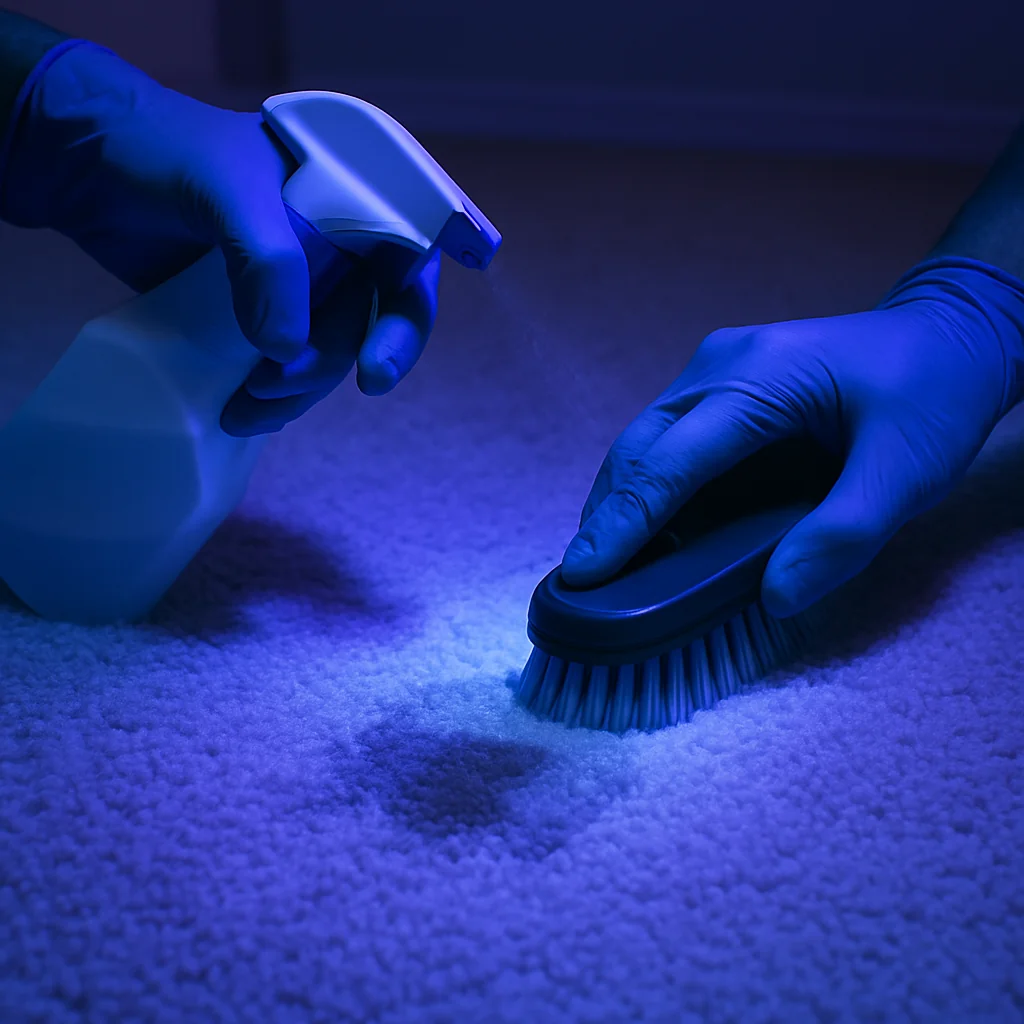
Pet urine is the hardest carpet problem because it soaks through the carpet face into the backing, the pad, and sometimes the subfloor — so a surface clean removes the spot but leaves the smell. Real pet treatment works at the depth the urine reached: locating the affected areas (often with a UV light and a moisture meter), applying an enzyme product that breaks down the urine salts and the bacteria that cause odor, and using sub-surface extraction to flush the contamination out of the pad rather than just the surface.
The treatment is scaled to the problem. A single fresh accident is a spot treatment. A cat that has used one corner for months, or a house with widespread odor, needs heavier saturation, longer enzyme dwell time, and sometimes pad replacement in the worst areas — which is identified honestly during the inspection rather than promised away.
Long Bismarck winters concentrate the issue: pets are indoors for months, accidents don't get aired out, and forced-air heat carries the odor through the house. Spring is the most common time homeowners book pet treatment.
What Pet Odor Treatment Can and Can't Do
What it removes: surface stains, most set-in discoloration, and the odor from urine that reached the carpet and pad, when treated with enzymes and flushed properly. Most single-accident and moderate cases come fully clean.
What it can't always fix: urine that has soaked into the subfloor or wicked under tack strip, or years of saturation in one area, may need pad replacement or sealing the subfloor to fully resolve odor. An honest inspection says so up front instead of repeat-cleaning a spot that needs more.
Pet Stain & Odor Removal Near You
Pet Stain & Odor Removal FAQ
Enzyme treatment breaks down the urine salts and odor-causing bacteria rather than masking them, and sub-surface extraction flushes contamination out of the pad. Most single-accident and moderate cases come fully clean. Severe, long-term saturation may need pad replacement in the worst spots, which is identified during the inspection.
By the number and severity of affected areas on top of the carpet cleaning. A single fresh spot is a small add-on; widespread or long-set urine needs more product, longer dwell time, and sometimes pad work, which is quoted after inspection. A UV light helps find every affected area so nothing is missed.
Blot fresh accidents with a clean towel and avoid scrubbing, which spreads the stain. Skip store deodorizers and especially anything with vinegar or strong masking scent before a professional visit — some products set the stain or interfere with the enzyme treatment. Plain blotting and letting the cleaner inspect it is best.
Properly treated urine that reached the carpet and pad does not return once the salts and bacteria are broken down and flushed. Odor that returns usually means the contamination reached the subfloor or an area was missed — which is why inspection and treating to the correct depth matter more than just cleaning the surface.
Related Services
Pet Odor in Your Bismarck Home?
Treated to the pad with enzymes, not masked. Free estimate after a quick inspection.